


Among the various forms of mycosis, a large percentage of “coverage” is provided by the nail, or onychomycosis, an infectious disease known to people since ancient times, therefore folk remedies for nail fungus are no less popular than traditional pharmacological ones.People have preserved this knowledge for many generations, shared it, and almost every person knows some fungus recipe that he, relatives, friends or just acquaintances have already “tried”.
Causes of the disease
Before treating nail fungus, it is important to understand what is causing the condition.
Several types of microflora are “responsible” for the spread of onychomycosis:
- Dermatophytes.
- Tricophytes.
- Candida yeast.
- Aspergillum mold.
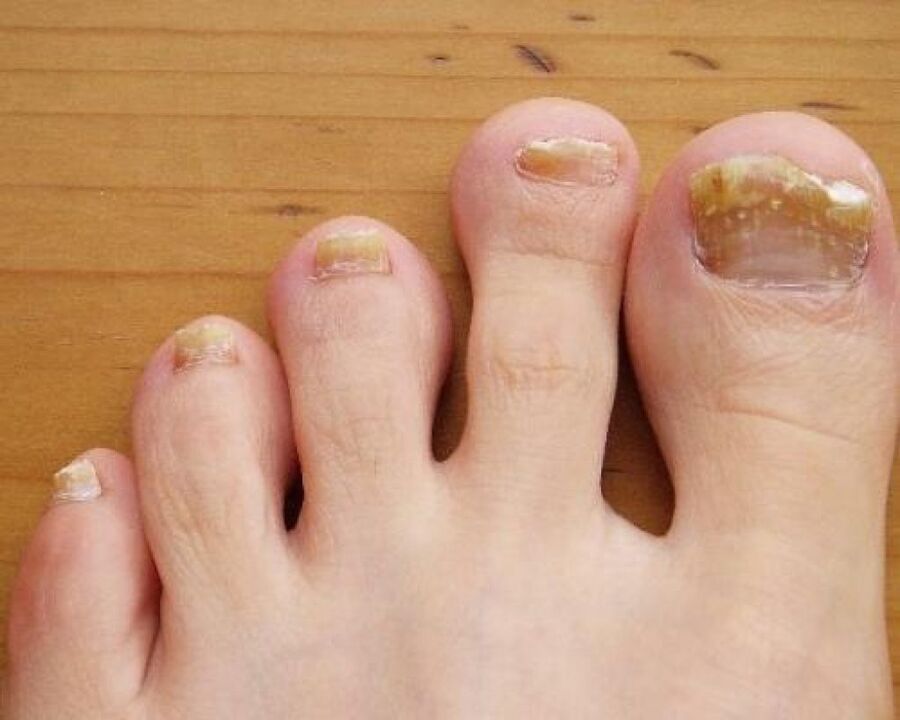
This microflora is dangerous for the lower and upper extremities, but most often (in about 70% of cases) toenails become infected.This “intelligibility” is due to the fact that the foot is in a high-risk area: most of the physical load falls on it.The foot sweats more and constantly wears shoes - especially in urban conditions, when a person is forced to spend most of the day in shoes, and if they are not hygroscopic and comfortable enough, this serves as an additional “plus” in favor of the disease.
The culprit for most cases of onychomycosis is the so-called red Trichophyton, or Trichophyton rubrum, from the genus of dermatophytes.The main route of penetration into the body is through the skin, which is why nail onychomycosis is one of the diseases transmitted by contact.Direct touching of the affected dermis to healthy skin and contact with objects contaminated with fungal spores are also dangerous.From the surface of any person's skin, microscopic particles of dead epidermis, invisible to the eye, constantly fall out, being replaced by new cells.If you are infected with ringworm, these particles contain its spores, always ready to find a new “host”.Once in the dermis, they easily “move” to the nail and begin their destructive work.
But this only happens if the disputes are under favorable conditions, which include:
- uncomfortable shoes;
- microtraumas on the feet - abrasions, cracks, calluses;
- hyperhidrosis – increased sweating;
- high temperature and humidity of the environment;
- weakness of the immune system;
- somatic diseases – diabetes mellitus, etc.
The time factor also plays an important role: the mycelium does not take root in the skin instantly, and if it is removed before the spores penetrate deeply enough, infection can be avoided.Therefore, maintaining personal hygiene is very important to protect against infections.
But if, despite all the precautions, it was not possible to protect yourself from the disease, what symptoms can be used to determine that it is time to start treatment for nail onychomycosis?
Symptoms of pathology
Speaking about how to treat nail fungus, it is important to note that the symptoms of the disease do not appear immediately: from the moment of infection until the first signs appear, a fairly long period of time passes, from several days to several months, depending on its varieties.
Experts know four main types of onychomycosis:
- Normotrophic.
- Hypertrophic.
- Atrophic.
- Distal and lateral (subungual).
Each of these types has its own symptoms:
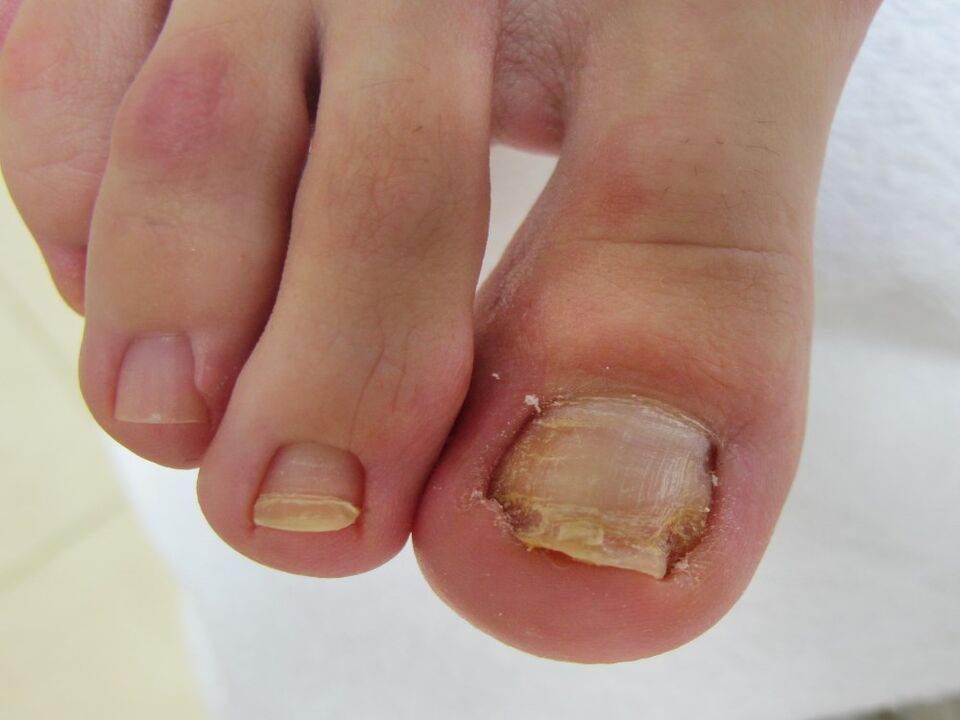
- In the first case, the plate maintains its normal thickness, but changes its natural color, becoming covered with stripes and spots of a yellowish-white hue, initially located on the sides and gradually covering the entire surface.It moves so far away from the finger that it is often removed spontaneously.If you accidentally catch something, the nail protection can “fly out”, exposing the bed.
- Hypertrophy is characterized by thickening of the plaque, it becomes gray or dirty yellow, begins to disintegrate and deform, becoming similar to a bird's claw, which is why this deformation is called onychogryphosis.
- Atrophy causes complete destruction of the shield, resulting in exposure of the nail bed, which is covered by a layer of loose skin scales.The process starts from the top, gradually advancing towards the so-called germinal zone, which can remain intact.
- Symptoms of the distal and lateral types of onychomycosis have similar characteristics and are often present simultaneously.The affected shield becomes opaque and covered with transverse grooves.Furthermore, the color varies depending on the form present: yeast-like ones are characterized by a yellow hue, while moldy ones are greenish or almost black.If left untreated, the plaque can collapse completely.
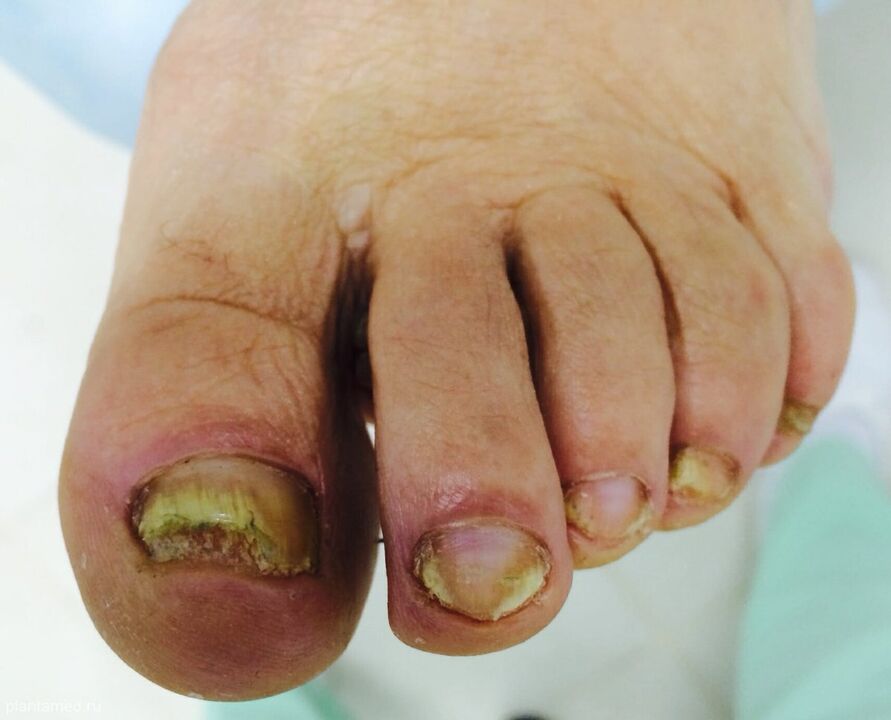
If you discover at least one of the listed signs, you should act immediately.By refusing treatment for nail fungus, a person puts not only themselves at risk, but also their entire environment.At the same time, the main danger of nail fungus is not the aesthetic side of the problem.Without encountering resistance, the fungal mycelium is able to penetrate the blood and internal organs - lungs, esophagus, intestines.
Ways to get rid of the disease
How to get rid of nail fungus?The first step should be to contact a specialist - only he can be responsible for establishing the diagnosis and prescribing medications.Diagnosis is not limited to an external examination, even if all the signs of fungus on the legs, as they say, are present, since the possibility of diseases of a non-mycotic nature with similar symptoms cannot be excluded.Only the results of laboratory tests, including microscopy and the so-called Sabouraud bacterial culture, can confirm or refute the suspicion.
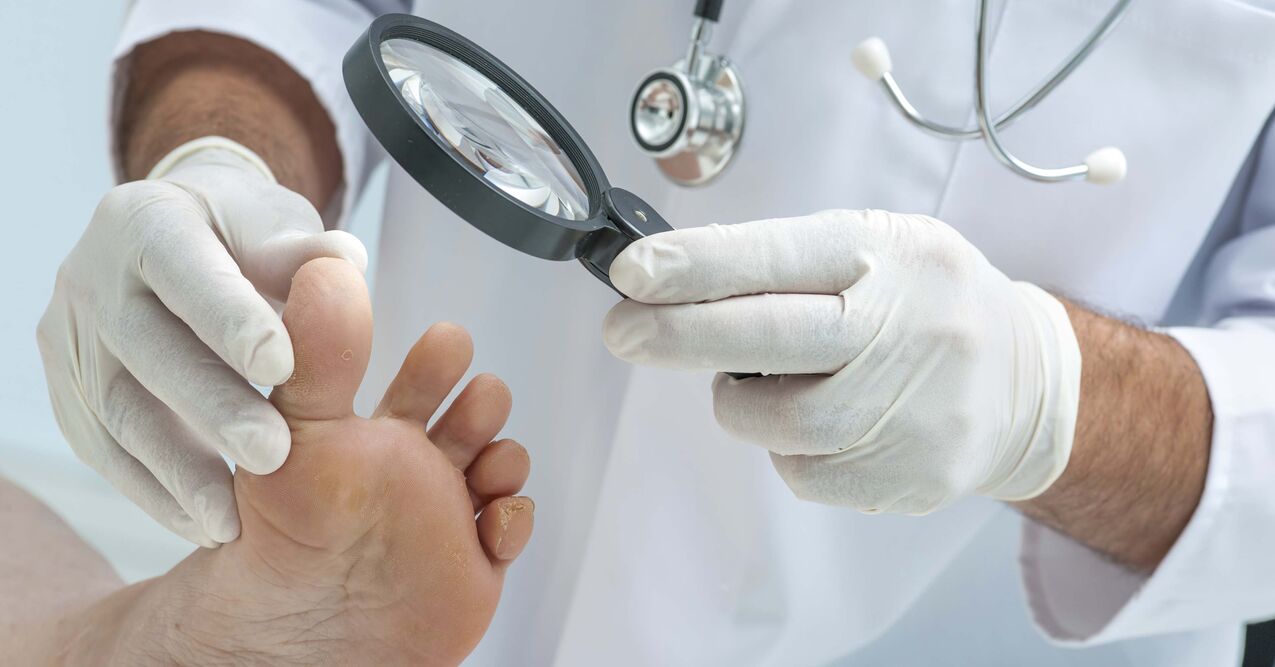
If a diagnosis of onychomycosis of the nails is made, home treatment with topical and oral antimycotics is prescribed by the doctor.After consulting him, you can supplement traditional nail fungus treatment with folk remedies.What kind - we'll talk more about this later, but be prepared for the fact that you will have to undergo treatment for a long time, since folk remedies against nail fungus, as well as conventional ones, must be used until new, healthy plates grow.
Traditional methods of treating nail fungus are very numerous.Most of these recipes are so-called local, that is, external methods based on direct action on the mycelium.
A variety of components are used:
- medicinal herbs;
- garden and garden plants;
- substances used at home.
Onychomycosis is popularly treated with simple soap, baking soda, table vinegar and even an unsafe ingredient such as concentrated vinegar essence.It must be said that with proper, careful and systematic use, many of them show quite effective results, helping to eliminate nail fungus at home.And if the diagnosis is made by a professional who has nothing against the use of these methods together with traditional ones, traditional medicine comes to the aid of pharmacology.
Medicines around us
For ringworm on the legs, treatment includes baths, compresses, lubricants and other external procedures.
All popular recipes for nail fungus can be divided into three groups:

- using herbs;
- use vegetable and fruit juice;
- using “household chemicals” - soda, soap, vinegar.
If you treat nail fungus with folk remedies, the most effective are lemon and vinegar, as it is known that an acidic environment for fungal spores is an extremely unfavorable factor.Many healers recommend starting treatment for nail fungus at home with lemon juice.We are going to share several ways to use lemon that will help cure nail fungus at home.
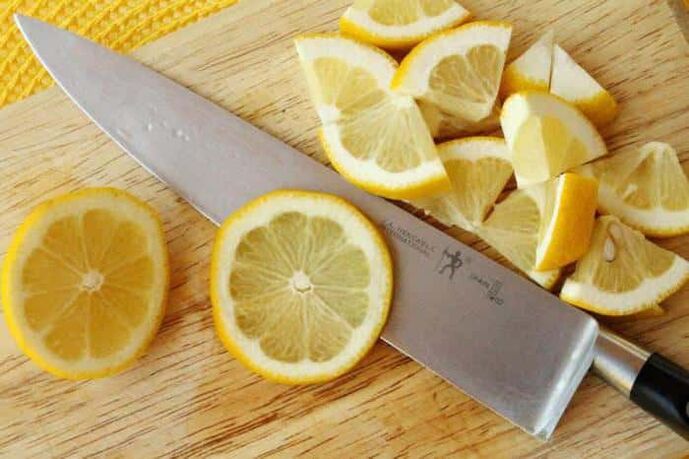
Cut the citrus into slices as thin as possible.Divide each one into parts, the size of which will depend on the size of the affected nail.For large fingers, half a mug will do;for small fingers, a quarter will be enough.After steaming the shields and treating them with nail scissors, tie the lemon pieces to your nails.Secure each of these “compresses” with a bandage, covering them with cellophane on top or simply placing a plastic bag of a suitable size on the foot.It is advisable to apply the bandage at night, before going to sleep, focusing on your own sensations.If you do not experience serious discomfort, lemon applications can be left overnight.In the morning, wash your feet without soap and put on fresh, pressed socks.
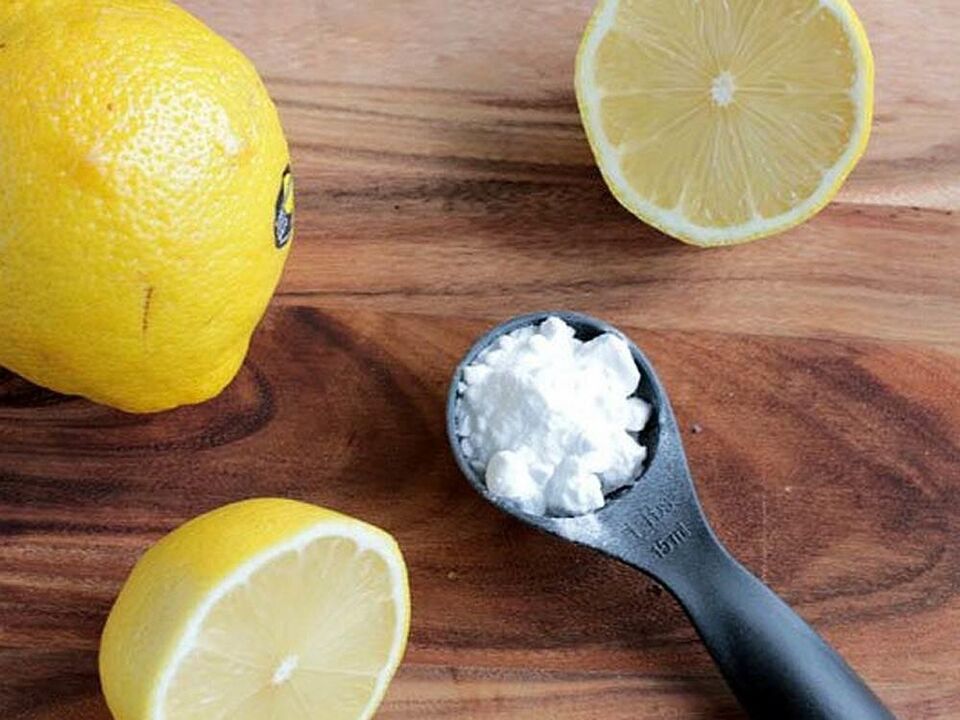
Another effective remedy for nail fungus is baking soda mixed with lemon juice.After steaming your feet in a solution of salt and soda at the rate of a tablespoon of both for every 2 liters of water, you need to squeeze a little fresh lemon juice onto each sore toe so that it remains not only on the shield, but also on the skin around it.Then you need to sprinkle your fingers with baking soda.Foam will appear, which is a mixture of nail fungus.
Those who have tested lemon recipes claim that such procedures can cure nail fungus by repeating them every night for one and a half to two months.
It is recommended to treat nail fungus with vinegar;Advanced forms can be very successfully eliminated using folk remedies.Folk remedies against onychomycosis are different types of vinegar: table, apple, concentrate.
Severe toenail fungus is treated with vinegar as follows:
- Combine vinegar and iodine in a 1 to 1 ratio, lubricate diseased plaques with the composition twice a day, morning and evening.
- At night, mix apple cider vinegar and any vegetable oil in equal parts, moisten a piece of cotton wool with the mixture.Apply it to the sore toe, glue it with a bandage, put a sock on your foot and go to bed.
- Apple cider vinegar baths help if you keep your feet in the warm solution for 15 minutes every day and then go to bed without rinsing.
- Mix 9% vinegar with freshly squeezed carrot juice in equal parts and lubricate your nails with this mixture, applying it with a cotton swab.The effect will be twofold: vinegar is fatal to fungal spores, and carrot juice is good for the skin.
- A popular folk remedy for nail fungus is an egg dissolved in vinegar essence.It is placed in a glass so that the peel does not touch the walls of the container, filled with essence and placed in the dark.After the shell has completely dissolved, apply the product to the previously steamed, trimmed and filed affected plate with a cotton swab.

Many people use liquid for nail fungus - a rather old but effective medicine consisting of glycerin, vinegar and an alcoholic iodine solution.Its preparation can be ordered at the pharmacy.
Important: if the medicine contains vinegar, it can only be used if there are no minor injuries to the skin.Otherwise, you will experience not only very painful sensations, but also unpleasant consequences in the form of burns.
Do herbs help against fungus and if so, how can you cure nail fungus with their help?The most famous herbal folk recipe consists of milkweed, brewed with boiling water in a ratio of 1 to 2 and evaporated in a water bath.The broth must be diluted in a liter of water and the feet steamed.
Treatment of nail fungus with folk remedies even includes a nail fungus spell, but it's not worth talking seriously about this method - there are many much more effective methods, and folk remedies can cure this disease without resorting to unconventional methods.
It is only worth remembering that it is possible to cure nail fungus, but there is no immunity or vaccination against fungal infections, therefore, if you managed to cure nail fungus, treatment with folk remedies gave results or a medication worked, from now on you must carefully follow the rules of personal hygiene and care to avoid reinfection.