


Nail fungus is a common, difficult-to-treat disease that affects one in four people worldwide.In medicine, terms are used to refer to fungal infections of the nails of the lower extremities - onychomycosis or epidermophytosis.In the latter case, there are foci of infection on the skin.
Causes of big toe fungus
Infection occurs through contact with an infected person, their belongings or in public places.The humid, warm environment of swimming pools, saunas and baths is most conducive to fungal growth.Walking barefoot on the beach can also cause fungal spores to enter the nail and foot.
Most often, onchomycosis affects the big toes and toes of both feet, which can be explained by microtraumas when walking, opening the door for fungal spores.As a result of contact, an infection occurs, which sometimes the body cannot cope with.
Reasons leading to the development of the disease:
- Decreased immunity due to acute viral illness, HIV or immunodeficiency.
- Diabetes mellitus, psoriasis, which disrupts the acidic reaction of the skin.The natural barrier that prevents the development of infections disappears.
- Varicose veins and atherosclerosis of the vessels of the lower extremities cause deterioration of blood circulation in the lower extremities.
- Wearing tight shoes can cause scratches and calluses.
- Failure to comply with personal hygiene rules creates an environment favorable to the development of fungi.
- Non-compliance of footwear with sanitary and hygienic requirements.Feet sweat and stay wet for a long time.
- Professions that involve prolonged exposure to moisture or wearing rubber shoes.
- Hyperhidrosis, in which the skin of the foot is constantly wet.
Men aged between 35 and 75 are most susceptible to foot and nail fungus.Children under 15 years of age practically do not suffer from athlete's foot.
Important.To remove nail fungus, treatment must be carried out systematically and regularly.Onychomycosis is known for frequent relapses.
Symptoms of fungus on the big toe nail
When fungal spores penetrate the skin or under the nails, they begin to actively grow and reproduce.The mycelium threads penetrate deep into the tissues, feeding on the cells of the human body.
The characteristic symptoms of the first stage are:
- the appearance of red, scaly patches on the skin of the legs;
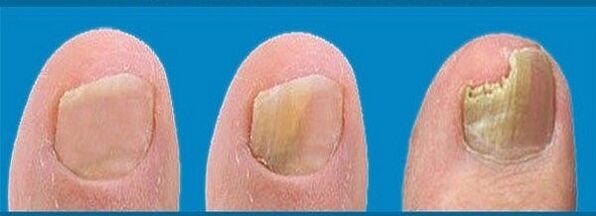
- small whitish stripes and dots appear on the surface of the nail;
- the nail plate becomes covered with tubercles and irregularities.
Further development of the fungus has the following signs:
- changes in nail color;
- the nail plate becomes thicker;
- the skin on the finger swells and itches.
If left untreated, the nail will collapse or peel off completely.This is accompanied by cracking of the finger skin, itching and pain.
Thumb fungus cannot be cured with folk remedies alone.Complex treatment is required to destroy the mycelium and prevent recurrence of the disease.

Diagnosis of big toe nail fungus
If you notice symptoms of a fungal infection on your big toe nail, see a doctor.A mycologist deals with the treatment of epidermophytosis.
Not every clinic has such a highly specialized specialist, so most often the treatment is prescribed by a dermatologist.
The doctor performs a visual examination and takes a sample of the affected tissue to determine the type of parasite.There are several forms of fungi that affect the nail plates of human fingers:
- white surface fungus;
- normotrophic;
- hypertrophic;
- atrophic;
- next;
- total.
Tissue analysis is necessary to prescribe the correct treatment method.The specialist will determine the type of infection based on the color of the nail, structure, nature of the destruction and condition of the skin of the foot.He will tell you how and how to treat fungus on the big toe.
How to cure nail fungus
Treatment of epidermophytosis is carried out comprehensively:
- oral medications;
- external means;
- traditional medicine methods.
The attending physician prescribes medicines in tablets that must be taken orally according to a specific regimen.This leads to the accumulation of active substances in the cells of the human body and has a detrimental effect on the causative agent of the disease.
Medicines designed to destroy fungal infections are effective.Some of them have side effects and restrictions associated with age, pregnancy, breastfeeding and chronic diseases.Therefore, you need to take the pills strictly as prescribed by your doctor.
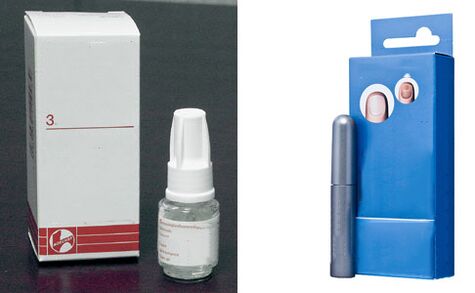
For external treatment, ointments, sprays, varnishes, adhesives and serums are used with substances that inhibit the development of the mycelium.These products are applied to clean, dry nails, 2 times a week to 2 times a day.It is necessary to follow the instructions and read the contraindications.
Folk remedies, as a rule, have no contraindications, but their effectiveness is significantly lower than that of medications.Its action is aimed more at symptoms than at treating nail fungus.But they clean well, relieve itching and disinfect the affected area.Its action is most effective in the initial phase of the disease.
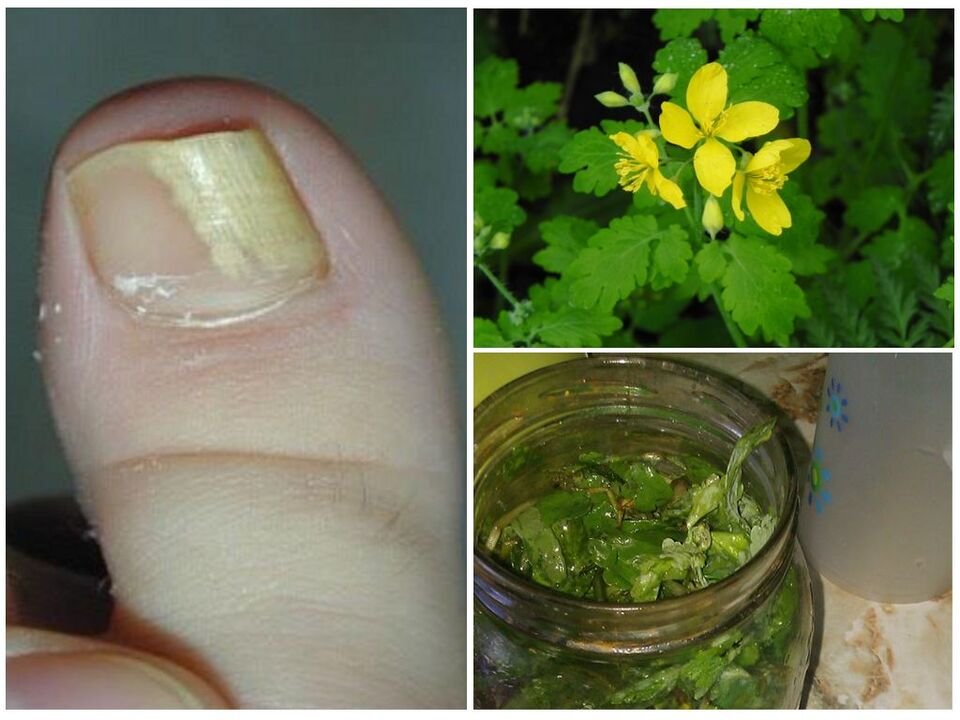
Folk remedies such as baths with soda, vinegar or sea salt are known.Dry the mixture with iodine and fresh celandine juice.Potato peel masks, lemon compresses, garlic gruel with olive oil are good for relieving itching.
The radical treatment for onychomycosis in the big toe is the removal of the nail plate.The operation is performed under local anesthesia, the wound is treated with an antifungal disinfectant.After a few months, a healthy nail grows.
In cases of intolerance, ineffectiveness of medications and an advanced form of the disease, a new method of treating fungus with a laser is used.The beam burns the mycelium to a depth of 7 mm.Healthy cells do not suffer and diseased cells regenerate quickly.This method has contraindications;you should consult your doctor.
Treatment with folk remedies for nail fungus
At home, the following are widely used to treat fungus on the nail plate:
- Vinegar or rubbing baths.Table or apple cider vinegar is dissolved in warm water at the rate of 200 ml of 9% acid per 3-4 liters of liquid.The duration of the procedure is 15 to 20 minutes.Then, the feet are dried and socks are put on.Rubbing is done with undiluted table vinegar for 15 minutes.
- Soda baths.Three liters of solution should contain 3 tablespoons of baking soda.You can add grated laundry soap.
- Tea tree oil.A small amount of essential oil is added to the bath water.
- Iodine.Used in the form of lotions.Apply to the surface of diseased and healthy nails to prevent mutual infections.
- Celandine, tar and whiteness are excellent antibacterial agents.Lubricate the nail plate, avoiding contact with the skin.Use with caution.
- Onion and garlic juice and porridge.Mix with oil or alcohol, apply as a compress or lubricate the surface of the nail.Mixtures can cause burns and irritation to surrounding tissues, so they are used with great care.
Folk remedies are good for their accessibility and simplicity.But don't forget to visit a doctor.Complex systematic treatment gives the most tangible results.
Consequences of fungus on big toe nails
Onychomycosis is not a dangerous disease.You can live for many years suffering from discomfort and unpleasant appearance of your nails.But if immunity wanes with age or after illness, the fungus will “bloom in full bloom.”
Fungal spores can infect neighboring nails.And this is an additional unpleasant sensation.The progression of the disease leads to complete destruction of the nail plate.Sometimes a person is unable to walk due to pain.We have to resort to surgical intervention.
Important.Untreated onychomycosis is a source of infection for others.Horny particles and cells with mycelial spores can cause infection in others.
Preventing big toe nail fungus
Prevention of fungal diseases involves:
- avoid contact with an infected object;
- strengthening the immune system to protect against infections.
Personal hygiene must be maintained.Do not use other people's personal belongings and do not allow others to use them.Enter swimming pools, bathtubs, showers and saunas only with personal slippers.Wear disposable socks when trying on shoes.
Feet should be washed at least once a day with soap and socks should be changed daily.Dry and ventilate your shoes.Special liquids and sprays are sold for disinfecting shoes.
You need to monitor your health, eat well and observe a work and rest schedule.Do not start chronic illnesses.Sports and walking strengthen the immune system well.
If you become infected with a nail fungus, you will need to be diagnosed and treated with medications prescribed by your doctor.Appropriately use external means and traditional methods.The duration of treatment is generally 3 to 6 months.With regular treatment and prevention of reinfection, recurrence of athlete's foot is almost impossible.